
Priorities of Kirklees Council's new cabinet scrutinised by committee
The priorities of Kirklees Council’s new cabinet have come under scrutiny at a recent meeting.
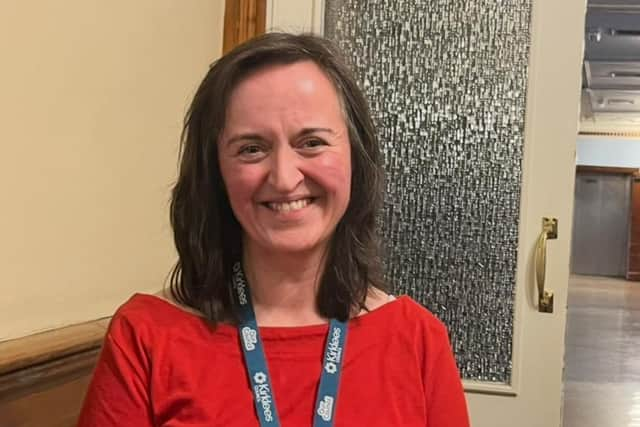
On Friday, September 13, Leader of the Council, Coun Sarah Wood, and cabinet member for strategic finance and local government efficiency, Coun Simon Brophy, attended a meeting of the council’s overview and scrutiny management committee. Here, the pair presented their priorities.
Coun Wood had already spoken on her priorities at cabinet earlier in the week. In brief, these placed a focus on: putting Kirklees citizens first; prioritising civic pride; keeping all people in Kirklees safe; and ensuring value for money for all Kirklees taxpayers.
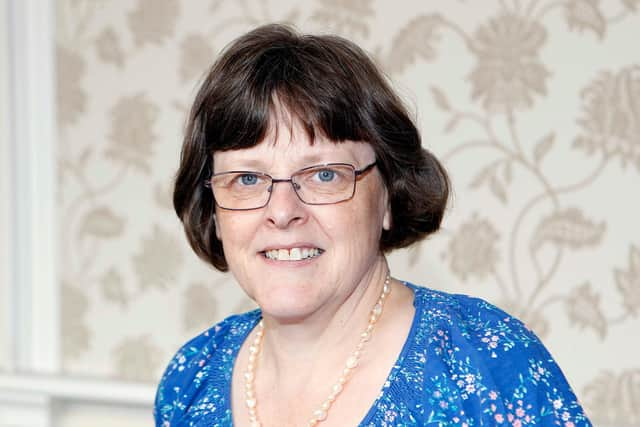
But the scrutiny committee meeting marked Coun Brophy’s priorities being heard for the first time. They include:

More transparency and accountability – around the budget, decision making, reports and quarterly performance reporting.
Ending wasteful spending – reviewing spend across the council, challenging unnecessary cost and making a push towards evidence-based spending.
Better management of investment and debt – reviewing the capital plan, testing major investments against council priorities and reducing the number of council-funded schemes to cut borrowing costs and debt.
Improving productivity and service efficiency – making the best use of technology to improve services, reviewing management structures and the use of agency staff and maximising external funding. Also, working on the cost strategy for adults and children’s social care to ensure better value for money, and placing a focus on prevention.
Upon coming into power, the new Reform UK cabinet inherited the existing council plan (2026/27-2028/29) which was devised under the previous Labour administration. This cannot be changed without securing a Full Council majority vote.
Coun Wood explained that the administration has chosen not to attempt to do so as it will soon be developing its own plan.
But this does mean that there are some misalignments between the goals of the new cabinet and the plan as it stands, the meeting heard. One such area being aspects of equality, diversity and inclusion (EDI).
All local authorities have a general duty to take steps to: eliminate discrimination, harassment and victimisation; advance equal opportunities for all; and foster good relations between all individuals, under the Equality Act 2010.
With this in mind, panel chair Coun Liz Smaje (Con, Birstall and Birkenshaw) asked how the cabinet planned to shape EDI policy in light of the council’s legal duties.
Coun Wood said: “That’s a very simple answer for us – anywhere where we have a lawful duty, we will make sure that that lawful duty is committed to.
“Anywhere where it is guidance only, or anywhere where we are able to vary without breaching our lawful duties, then we will seek to investigate that.”
When asked to provide examples of where her cabinet differs from the previous approach on the matter, Coun Wood said she couldn’t provide any yet as this is something that is being explored, and will be further explored “in the fullness of time”.
Coun Akhtar Kasia (Batley East, Kirklees Independents) wanted to know what the aim of the review of the council’s EDI-activity is.
Coun Wood explained that the aim is “not philosophical” but to create “objective changes” with a focus on whether money is being spent in the right places.
She also said that the criteria, which will determine whether an EDI-related activity is retained, changed or stopped, have not yet been set, in response to a further question.
Members were also keen to hear more about the administration’s approach to boosting civic pride across the borough.
Coun Kasia said it was “great to see” civic pride as a priority of the new cabinet. However, he questioned how it intended to get to a point where residents were proud to live in their local areas.
Coun Wood said that her strategy was inspired by the “Broken Windows” theory of policing. The theory, which was implemented under former New York Mayor, Rudy Giuliani, argues that visible signs of crime and anti-social behaviour – like broken windows – lead to more criminal behaviour.
Coun Wood said Mr Giuliani’s approach resulted in “proven, data-driven outcomes” in both boosting civic pride and reducing more serious crime, as well as lower-level crime.
She said she would be looking to use an “integrated strategy” where a number of different activities work towards the common goal of increasing civic pride.
Coun Smaje highlighted that the council is a partner with West Yorkshire Police (WYP), not in charge of it, and questioned how the administration planned to bring the police on board with the council’s approach to crime and disorder. She also raised the point that different communities relate to different civic entities.
Coun Wood said: “Where we don’t lead, we align.”
She said that her administration would make sure that their priorities are aligned with those of WYP.
She said she had met with WYP Chief Superintendent Jim Griffiths and added: “The details of the conversation we had tell me that the Chief Supt and I are very aligned in what we want to do.”