
Cleckheaton councillor raises concerns over new planning rules described as 'a backwards step'
A Cleckheaton councillor has raised concerns over the introduction of new planning rules.
The regulations, under the National Scheme of Delegation, will be coming into effect from October 31 under the Labour government’s wider programme of planning reform.
The move will see more decisions made by planning officers, with applications only sent to Kirklees Council’s strategic planning committee or district-wide planning committee if certain conditions are met.
The aim is to speed up decision making and ensure greater clarity and consistency about the role of planning committees.
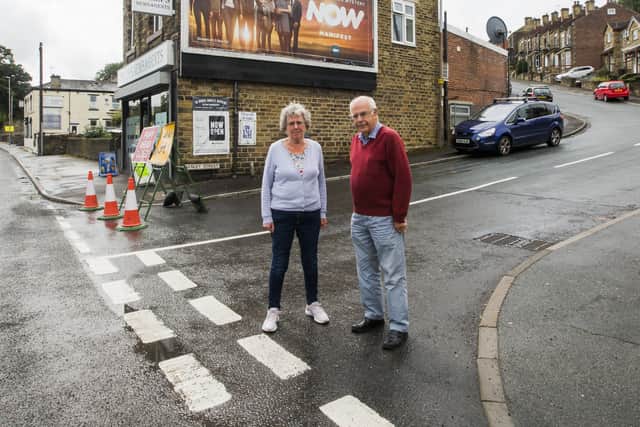

But it will remove the existing right of Kirklees councillors to refer an application to a committee for decision.
Applications which receive a high number of public representations contrary to the recommendation of officers automatically go to committee at the moment, but this will no longer be the case. Such plans could still be decided by a committee if they meet a new test.
Going forward, applications will be divided into schedule one and schedule two.
All schedule one applications – which primarily refer to householder, minor commercial and minor residential developments – must be determined by council officers.
Schedule two generally covers larger plans as well as applications to change the use of a premises. These can be decided by either planning officers or planning committee.
To get to the planning committee, the chief planning officer and chair of the relevant planning committee must agree that a schedule two application raises a significant economic, social or environmental issue for the local area; or come with one or more significant planning matters. This process is called the “gateway test”.
Local authorities get to decide to which schedule two applications the gateway test can be applied.
The matter was discussed by the corporate governance and audit committee on October 9, with several councillors who do not sit on the committee also in attendance.
Coun Andrew Pinnock (Lib Dem, Cleckheaton) said that the council needed to look at “damage limitation”.
He spoke of the “crucial” role of planning committees in ensuring decision making is made public and added: “Any attempt to restrict the use of planning committees I think is a backwards step.”
Coun Kath Pinnock (Lib Dem, Cleckheaton) said she believed the regulations are “based partly on false premises” – that delays in decisions on planning applications are entirely the responsibility of the democratic process.
She added: “Let’s not kid ourselves that this is a manifest robbing of councillors’ rights because 95 per cent are already made by planning officers.”
She said that while the council has to “accept that the law is the law”, it needed to make the best of the situation and shape the policy as best it can.
She suggested some amendments to the recommendations made by officers, which were backed by committee members.
Officers had proposed that applications for developments of more than 100 houses or exceeding 5,000 sq m in gross floor space would be the subject of the gateway test. But members felt this was too broad and agreed to a reduction.
After much discussion, it was agreed that 40 houses or 1,500 sqm be the threshold.
The proposals were due to be considered by the full council at its meeting yesterday.