
80th anniversary of VE Day: How a Batley man's late grandfather started a new life in Switzerland after escaping from notorious prisoner of war camp
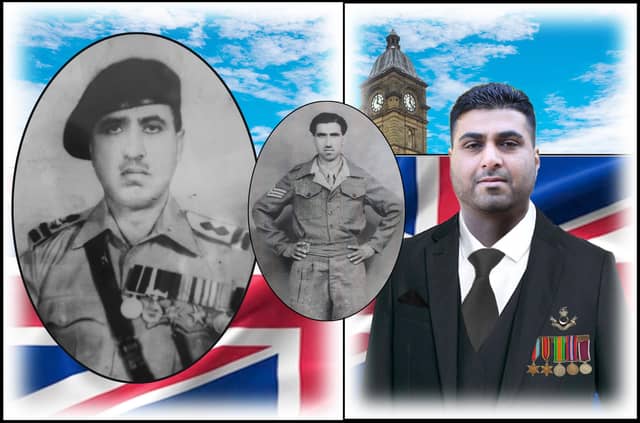

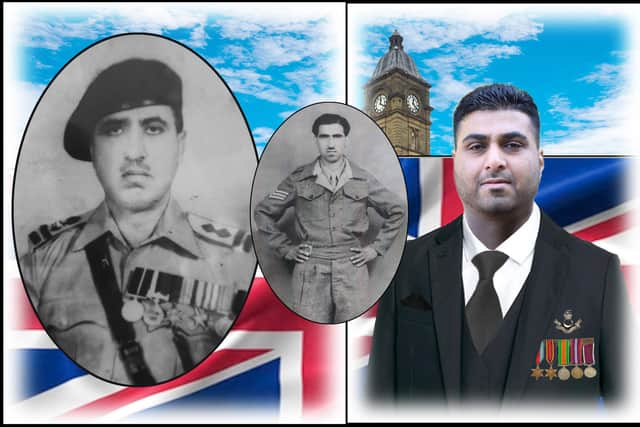
As part of this year's 80th anniversary of VE Day commemorations, Mr Fakhar Bhatti, from Hanging Heaton, talked about his late grandfather's experience in the Second World War as a way to remind people about the many sacrifices made by local Muslims for the war effort.
Mr Bhatti gave some valuable information from his grandfather's wartime diary for the first feature. This week's second feature is an account of the deceased soldier's years at “Stalag 315” prison camp in Nazi occupied France.
Speaking to the Reporter Series, Mr Bhatti said: "My grandfather, Raja Gulzar Khan Bhatti, had enlisted himself in the British-Indian Army shortly before the outbreak of the Second World War.
“He was actually serving in France under the British Expeditionary Force when the first clashes broke out with Germany on the date of May 10, 1940. He fought bravely as a frontline British-Indian Army soldier. But after only six weeks of fighting, the French government surrendered on June 21.
“From the information in his diary, my grandfather was rounded up as a prisoner and taken to a notorious German POW camp known as 'Stalag 315'. This camp had been opened near a town called Epinal in the south of France.”
Speaking about the conditions at “Stalag 315”, Mr Bhatti explained: “My grandfather's diary extracts described those prison camp years in captivity as the worst experience of his entire life. He was constantly thinking about his young wife and parents.
“My grandfather also faced other problems in the prison camp because of his army rank as 'Subedar' ('Warrant Officer').
“The inmates were always grumbling about the camp's rice and soup rations. The men usually got a severe cough whilst eating because there seemed to be far too much salt in the cooking. In fact, my grandfather saw lots of comrades regularly falling ill and laid in their bunks with stomach pains.
“As an officer, it was very distressing for him to see some men vomiting blood and dying in front of his own eyes.
“At first everyone thought the sickness was a food poisoning bug going around in the camp. Yet, the helpless prisoners slowly found out the SS guards were deliberately mixing crushed glass into the rice.
“The inmates at 'Stalag 315' could not even receive any red cross food parcels. Neither were they allowed to write letters to their families.
“Most of the soldiers had worried parents back 'home' in the Sub-Continent wondering if their sons were alive or not.
“My grandfather's situation was the same. The family had no idea of his whereabouts and had given up hope, thinking he had been killed somewhere in Europe.”
Mr Bhatti talked about his grandfather's eventual escape by saying: “My grandfather remained a POW for four long years at 'Stalag 315' until May 11, 1944. That date changed everything when a squadron of American B17 Liberators bombed the camp’s outskirts - badly damaging its walls.
“Along with another 800 inmates, my grandfather quickly grabbed his belongings and escaped through one of the gaps in the wall. He spent the next three days with another six colleagues hiding under a huge haystack inside a barn on a nearby farm.
“The farm owner and his wife had secretly given shelter to the tired escapees until it was safe enough for them to move on.
“The situation was far too risky for the farmer to let them stay permanently on his property. My grandfather was however already thinking of escaping into neutral Switzerland.
“The elderly couple helped by giving some discarded civilian clothing to the seven men so they could disguise themselves as French locals. But more importantly, my grandfather was also handed a map by the farmer's wife showing directions to the Swiss border.
“Physically weak and malnourished, the men had to eat dry leaves whilst walking fifty miles towards the border. But what they did not realise was the Franco-Swiss border happened to be the River Rhine separating the two countries as a natural barrier.
“It was far too dangerous to swim across this deep river. The only way to reach the other side was by boat.
“The owners of a boat finally agreed to take them, and everyone got on board. But the boat's engine suddenly shut down halfway over the river.
“My grandfather along with his six comrades was then physically attacked, beaten and overpowered by the other passengers.
“All seven men were thrown out of the boat into the river. Five of his screaming colleagues immediately drowned in the cold water.
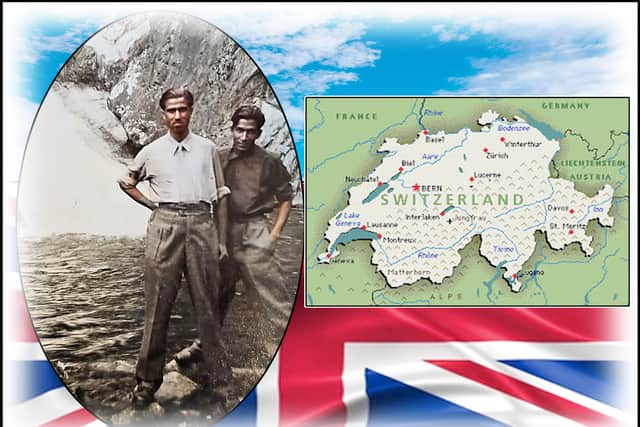
“But my grandfather and one of his friends was able to cling onto the side of the boat, with their legs dangling in the water. They were the only two survivors who made it to the other end of the river - into Switzerland.
“The first thing my grandfather did in Switzerland was to go to the British Embassy and to report the names of the drowned soldiers so their next of kin could be notified by the War Office.
“He himself was offered permanent British citizenship because of his valuable army service. Yet, my grandfather refused the offer due to the trauma he had suffered.
“He instead decided to remain in Switzerland until the end of the war, working at a shop repairing Rolex wristwatches.
“He returned back ‘home’ to the Sub-Continent in the Autumn of 1945.”