
Sharing history at Iftar evening
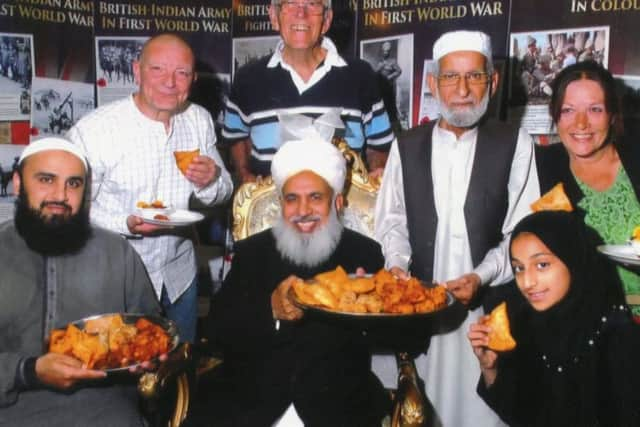
Learning about shared history and shared culture, as well as enjoying different varieties of samosas, were all on the programme at this year's Farewell Ramadhan Community Iftar, organised by the Jamia-Al-Saeed Mosque.
Residents who live near to the Bromley Street place of worship in Hanging Heaton, Batley, along with ward councillors, school-teachers, and university lecturers, all joined in the festivities to mark the final few days of Ramadhan by having Iftari food with the mosque’s worshippers.

The Iftar evening began with a short friendly talk on Ramadhan – the month of fasting – and why it is always an important time in the Muslim calendar.
Those present learned fasting had at one time also been an important aspect of traditional British-Christian society.
Ramadhan’s significance for local Muslim families was also explained during the Armistice’s 100th anniversary year.
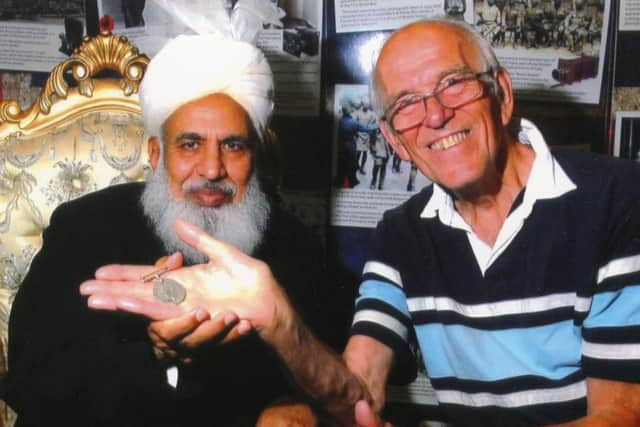
But the highlight came when the Head Imam, Qari-Hafiz Abdul Ghani, showed his late father’s wartime medal to the audience of more than 40 guests.
Warrant Officer (‘Subedar’) Sain Khan was a paratrooper during the Second World War. He was the first British-Indian Army Muslim to parachute into Normandy on D-Day in 1944.
Addressing the event, Head Imam of Jamia-Al-Saeed Mosque, Qari-Hafiz Abdul Ghani said: “My father was part of a large British-Indian airborne contingent trained to use their parachutes and to jump out over the drop-areas at Normandy.
“At first all the men in his regiment were really nervous. But then my father very bravely stood up, went to the aeroplane door, and simply jumped out without thinking twice.
“But this evening’s purpose is not to glorify war. It is to highlight our shared history and our shared culture.
“There is so much we have in common with each other as Muslim and English neighbours. We only have to do some positive thinking with an open mind.
“It was Indian Muslim culture that gave Samosas to the world. Today, it is also a fact Samosas have become an important part of British culture.”