
Tent-pegging rider encourages youngsters to take up horse riding
Babur Qureshi never had a tutor who could teach him how to ride. Neither did he get the time to have any riding lessons while growing up as a young teenager in the rural Mandra area of Pakistan.
Yet the desire to sit on a galloping stallion had always been his childhood dream – and it was in England not so long ago where the dream eventually became a reality.
Known to his family and friends as ‘Qureshi-Ji’, in 2020 he bravely climbed on the back of a horse for the very first time and learned to ride by himself through a process of trial and error.
It was not long afterwards when Mr Qureshi fulfilled another boyhood ambition and in 2021 bought an Andalusian stallion of the Hispano-Arab breed whom he named ‘Uqaab’. He is now riding this amazing four-legged wonder as a member of the Kohinoor Team at Neza Baazi tent pegging events held in Kirklees and across the rest of the country.
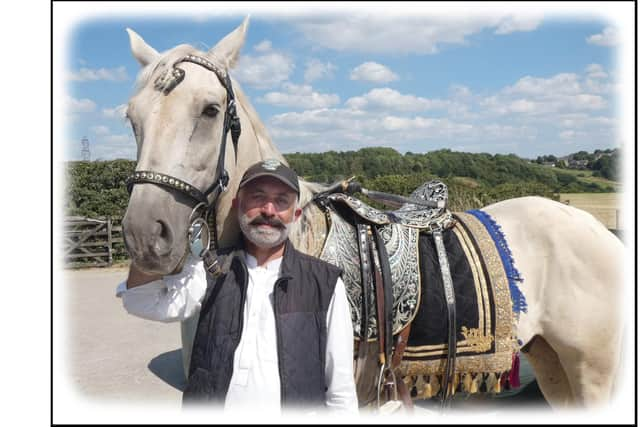

Mr Qureshi talked about the benefits of horse riding and also explained why he wants to encourage more local youngsters to come forward and to take up the activity.
He is especially keen to see an increase in the number of riders from British-Pakistani communities who at the moment are generally under-represented in equestrian sports.
Mr Qureshi said: “Horse riding can be therapeutic as well as being good for a person's well-being and mental health.
“In fact, riding eventually becomes a passion for most people who decide to try out this activity. It's similar to going for an early morning jog or spending a few hours at the gym each evening.
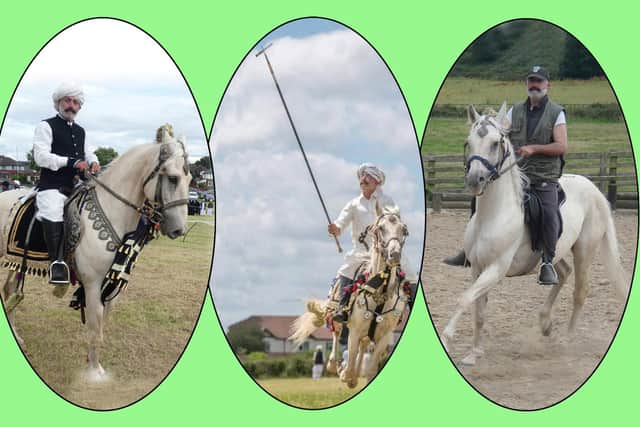
He continued: “Riding has always been an important way of life and a culture for the ancestors of local people who have roots going back to the sub-continent.
“Let's not forget mules, camels and horses were used everywhere during the British Raj before motorised vehicles came onto the scene.
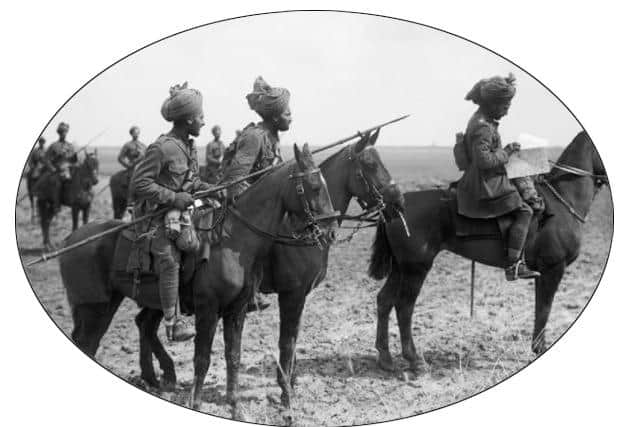
"Large contingents of cavalry riders even made up what was then the British-Indian Army.
“These brave ‘Fauji’ cavalrymen fought in huge numbers across Western Europe during World War One. In a sense, whether it’s history or sport, a forgotten heritage and a long-lost culture is once again getting revived at the tent pegging events held in Kirklees.”
Mr Qureshi said: “The first fact for a new student to understand is horses are incredibly sensitive creatures.
“But a horse obviously cannot speak about its emotions, it will instead communicate with you through its body language.
“So, it must be given love and respect at all times. Staying calm and showing affection towards your horse are very important qualities for anyone who wants to be a good successful rider.”
He continued: “You must have patience and wisdom, and most importantly a caring heart in order to master the skills of good horse riding.
“A sensible rider must show genuine love towards the horse. There is no doubt riding is an art, and any student who is not calm, or is not ready to show affection, has already failed at the first hurdle.”
He added: “This may sound strange – but a horse will know exactly what its rider is thinking!
“The horse becomes aware as soon as the person who is about to ride it gets hold of the bridle.
“The rider's heartbeat sends vibrating signals through the bridle's leather strap. A horse quickly gets to know what's going on in the rider's mind. So, it's important for any 'first timer' who is about to do some riding not to feel nervous.
“An ideal way to control your horse or a stallion is to gently speak in simple one-word ‘stop’ or ‘go’ phrases. Horses can quickly pick up and understand certain basic commands in any language. This is one of the many amazing qualities of a horse.
“There is a mistaken view horses only move if they are whipped. I suppose this false view sticks in people's minds when they watch the horse races on television. But the reality is racing horses are a different breed with different temperaments.”