
Dr's Casebook: Sherlock Holmes and Gray’s Anatomy
I went to the theatre last weekend to see a thrilling performance of The Return of Sherlock Holmes. I have been a fan of the stories all my life, so after the performance I felt stimulated to re-read a few of the stories about the great detective by Sir Arthur Conan Doyle. In turn that prompted me to read up on the author himself.
Dr Keith Souter writes: Doyle was a doctor who grew up and qualified from Edinburgh University in1881. In 1912, when his oldest son was a medical student at St Mary’s Hospital in London he spoke to the students and faculty about ‘The Romance of Medicine,’ and told them “To the man who has mastered Gray’s Anatomy, life holds no further terrors.”
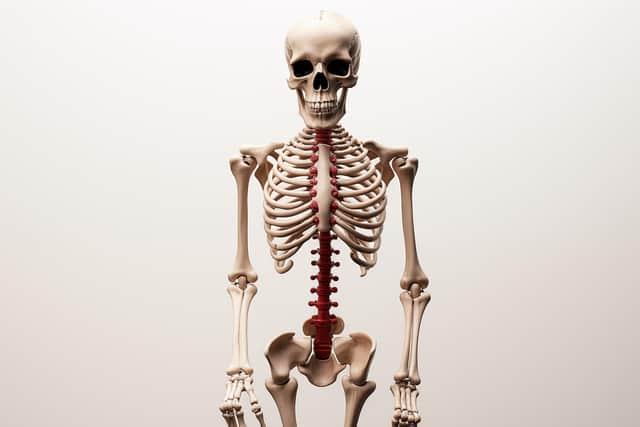

He was referring to one of the most famous medical textbooks. Generations of medical students and aspiring surgeons have poured over its pages since it was written in 1858. It covers in immense detail every structure of the human body, all in glorious medical Latin. I used it as a medical student and my copy still sits behind me in the bookcase in my study.
Henry Gray, the author of the book trained at St George’s Hospital in London and at the early age of 25 was elected as a Fellow of the Royal Society. A talented anatomist he wrote the book at the age of 31.
He also wrote a dissertation ‘On the Structure and Use of the Spleen.’ This was an important paper, since the function of the spleen had been a mystery to doctors. In medieval times it had been thought that the spleen concentrated certain vital body fluids or humours, and that an excess of them could result in various types of mental aberration, including anger and depression.
The spleen is an integral part of the body’s immune system. It removes old red blood cells from the circulation and also produces and keeps a reserve of these precious red cells in case the body suddenly needs them.
Sadly, Henry Gray died at the age of 34, while looking after a nephew who had smallpox. He contracted the disease and died shortly afterwards. It is ironic that at the time he was studying the anatomical effects of infectious diseases on various organs of the body, including the spleen.